Hyperpigmentation Treatment in Seoul, Korea
The Beauty Surgery Clinic | Sinnonhyeon · Gangnam
What Is Hyperpigmentation?
Hyperpigmentation refers to areas of darkened skin due to excess melanin production or uneven distribution of pigment. It includes sunspots (solar lentigines), post-inflammatory hyperpigmentation (PIH) from acne or injury, hormonal melasma, and uneven skin tone. At The Beauty Surgery Clinic, Dr. Lee evaluates the depth and cause of pigmentation to design a safe, effective treatment plan tailored to Asian skin anatomy.
Who Can Benefit from Hyperpigmentation Treatments?
You may be a good candidate if you:
- Have dark spots, uneven patches or brown discoloration on your face or body
- Notice post-acne marks or shadowing under the eyes
- Suffer from melasma linked to hormones, sun exposure or skin irritation
- Want a clearer, more even skin tone without heavy coverage makeup
- Seek treatments suitable for Asian/ethnic skin types, with minimal risk of further pigment issues
Treatment Techniques Used at The Beauty Surgery Clinic
1. Laser / Pico Laser Toning & Spot Treatment
Precise laser pulses target melanin deep in the skin without significant downtime, suitable for stubborn deep spots or mixed pigmentation.
2. Intense Pulsed Light (IPL) & Broad-Spectrum Light-Based Therapy
Used for broader tone correction and mixed brown-red discoloration; helps brighten the skin and reduce diffuse pigmentation.
3. Chemical Peels & Medical-Grade Peel Boosters
Light to medium peels help accelerate skin renewal and fade superficial pigmentation by exfoliating pigment-laden skin cells.
4. Brightening Injections & Skin Regenerative Boosters
Intracutaneous treatments (e.g., polynucleotides, glutathione, tranexamic acid injections) support pigment reduction, improve skin barrier and prevent recurrence.
5. Topical Prescription / Maintenance Program
After in-office treatment, a customised topical program (brightening serums, sunscreen, melanin blockers) helps maintain results and prevent return of pigmentation.
Benefits of Hyperpigmentation Treatment at The Beauty Surgery Clinic
✨ Significantly reduces appearance of dark spots and uneven skin tone
✨ Enhances skin clarity, brightness and tone uniformity
✨ Customised for Asian skin and pigment types
✨ Minimises risk of pigment recurrence with maintenance protocol
✨ Quick recovery compared to more invasive resurfacing procedures
Recovery & Aftercare Tips
🩹 Use broad-spectrum
SPF 50+ daily to prevent new pigment formation
🩹 Avoid direct sun exposure and tanning for 2–4 weeks post-treatment
🩹 Use gentle, barrier-supporting skincare; avoid harsh exfoliants until cleared
🩹 For laser/peel: mild brown darkening of spots followed by shedding/flaking is normal
🩹 Maintain follow-up sessions and topical regimen to sustain results
Estimated Cost in Seoul
💰 Single session laser/toning for pigmented spots: approx.
₩120,000 – ₩250,000
💰 Deeper pigment treatment (Pico laser, multi-session): approx.
₩250,000 – ₩400,000+
💰 Combined treatment package (laser + peel + injection) over 3–5 sessions: approx.
₩500,000 – ₩1,000,000
(Final quote depends on area, depth of pigment, number of sessions and clinic package.)
Why Choose The Beauty Surgery Clinic
- Expertise in pigmentation correction and advanced dermatology
- Utilises state-of-the-art devices and customised treatment plans for Asian skin
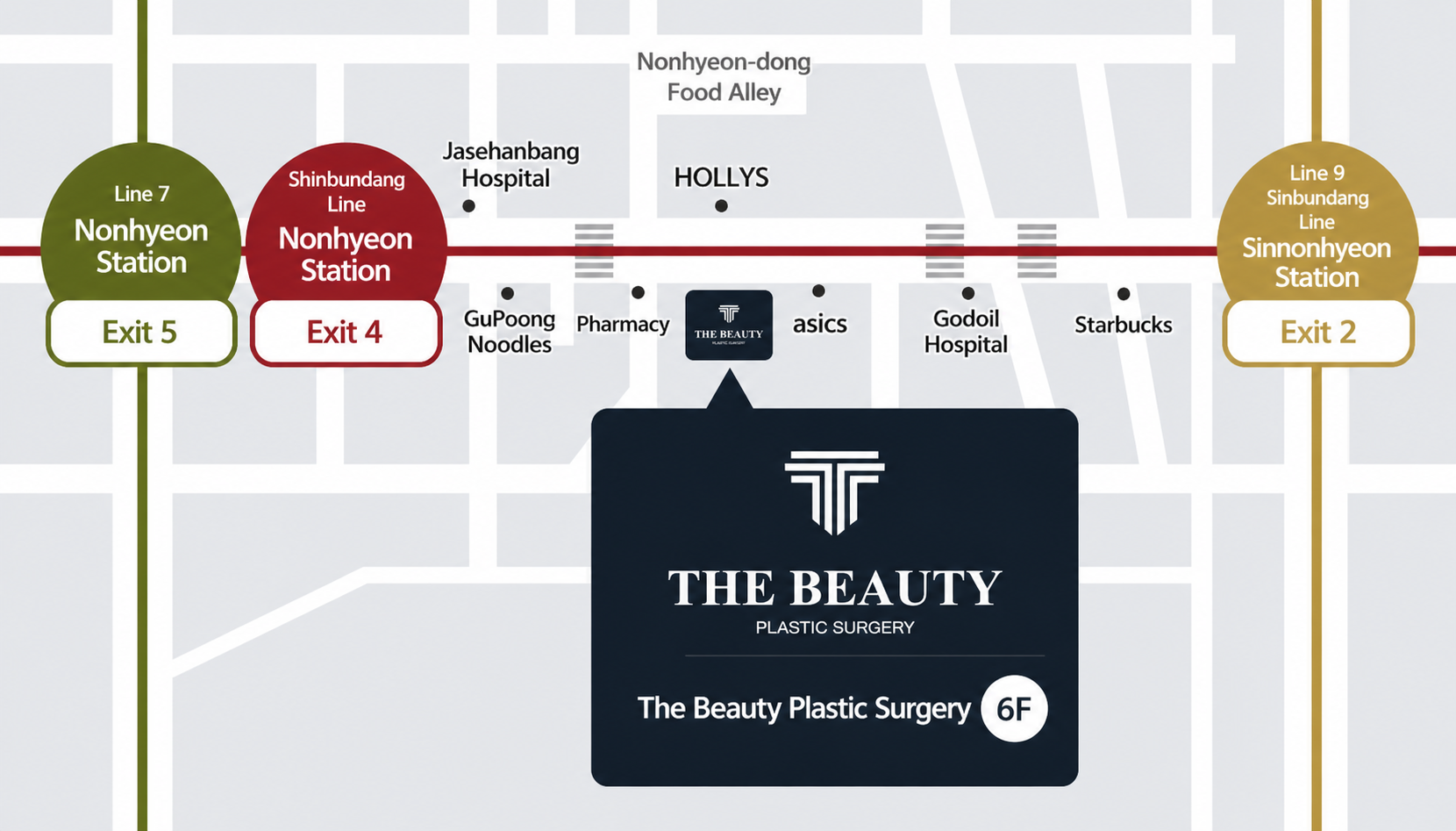
- Located in Sinnonhyeon, Gangnam — convenient for local and international patients
- English, Chinese, Japanese-speaking support available for foreign visitors
- Transparent pricing, realistic expectation setting, and structured after-care