Composite Facelift in Gangnam, Seoul — Multi-Layer Lift for the Midface, Jawline & Neck
A composite facelift lifts skin, SMAS, muscle and midface tissue together as one layer, treating the face as a whole rather than in isolated areas. It is designed to restore midface fullness and a firmer lower face while keeping natural expression. Planning starts with a consultation at our Gangnam clinic.
What is a composite facelift?
A composite facelift is a surgical facelift that elevates several tissue layers together — skin, SMAS, facial muscle (including part of the orbicularis around the lower eye) and midface fat — as one composite unit. Keeping the layers connected helps move the cheek back to a higher position and supports a smooth transition from the lower eyelid to the cheek.
Because it treats multiple layers at once, a composite facelift can restore midface fullness without relying only on fillers or fat grafting, while also firming the jowls, jawline and neck. It is often combined with neck rejuvenation, facial fat grafting or lower eyelid surgery.
Most candidates are in their 50s to 70s with moderate to advanced ageing, although younger patients with significant midface descent may also be suitable.
Is a composite facelift right for me?
A composite facelift is considered when ageing affects the midface as much as the lower face. You may be a candidate if you have:
- Midface descent and loss of cheek volume
- A long or hollow lid–cheek junction
- Deep nasolabial folds and marionette lines
- Jowls, a softened jawline or neck laxity
- Good general health and realistic expectations
Composite vs deep plane vs SMAS facelift
How the composite approach differs from other techniques.
| Technique | Layers lifted | Main strength | Best for |
|---|---|---|---|
| Composite facelift | Skin, SMAS, muscle and midface fat together | Midface restoration | Full-face rejuvenation with midface hollowing |
| Deep plane facelift | Skin + SMAS, ligaments released | Jowls and lower-face sagging | Moderate to advanced ageing |
| SMAS facelift | SMAS tightened, skin redraped | Jawline and neck | Mild to moderate ageing |
General guidance only. Your surgeon recommends a technique after examining you.
How a composite facelift is performed
A detailed operation planned around your facial anatomy.
- Before you fly
Online consultation
Send front and side photos via WhatsApp for an initial opinion and estimate.
- Day 1
Surgical planning
Your surgeon assesses skin elasticity, midface position, SMAS, muscle support and neck, and explains risks.
- Surgery
Incisions
Under general anaesthesia, incisions are hidden around the ears and hairline.
- Surgery
Composite lift
Skin, SMAS, muscle and midface tissue are elevated together and secured in a higher position.
- Surgery
Closure
Neck work or fat grafting is added if planned, then skin is closed without tension.
- Day 1–14
Follow-ups
Dressing checks and stitch removal before your flight home.
Composite facelift recovery timeline
Typical milestones. Everyone heals at a different pace.
| Time | What to expect | Activity |
|---|---|---|
| Day 1–3 | Swelling, bruising, facial and neck tightness | Rest with head elevated |
| Week 1 | Swelling peaks then settles | Gentle routine; no bending or lifting |
| Week 2 | Stitches removed; bruising fades | Light activities; flying after your final check |
| Weeks 2–3 | Visible improvement | Light daily activities |
| Months 6–12 | Progressive refinement; scars soften | Final result |
Your surgeon gives personalised instructions and confirms when you can fly.
Planning a composite facelift in Seoul
Practical tips for international patients.
Stay about 2 weeks
Allow around 2 weeks in Korea for surgery, follow-ups and stitch removal.
Flying home
Most patients fly after their final check. Keep your head elevated and stay hydrated.
Near the clinic
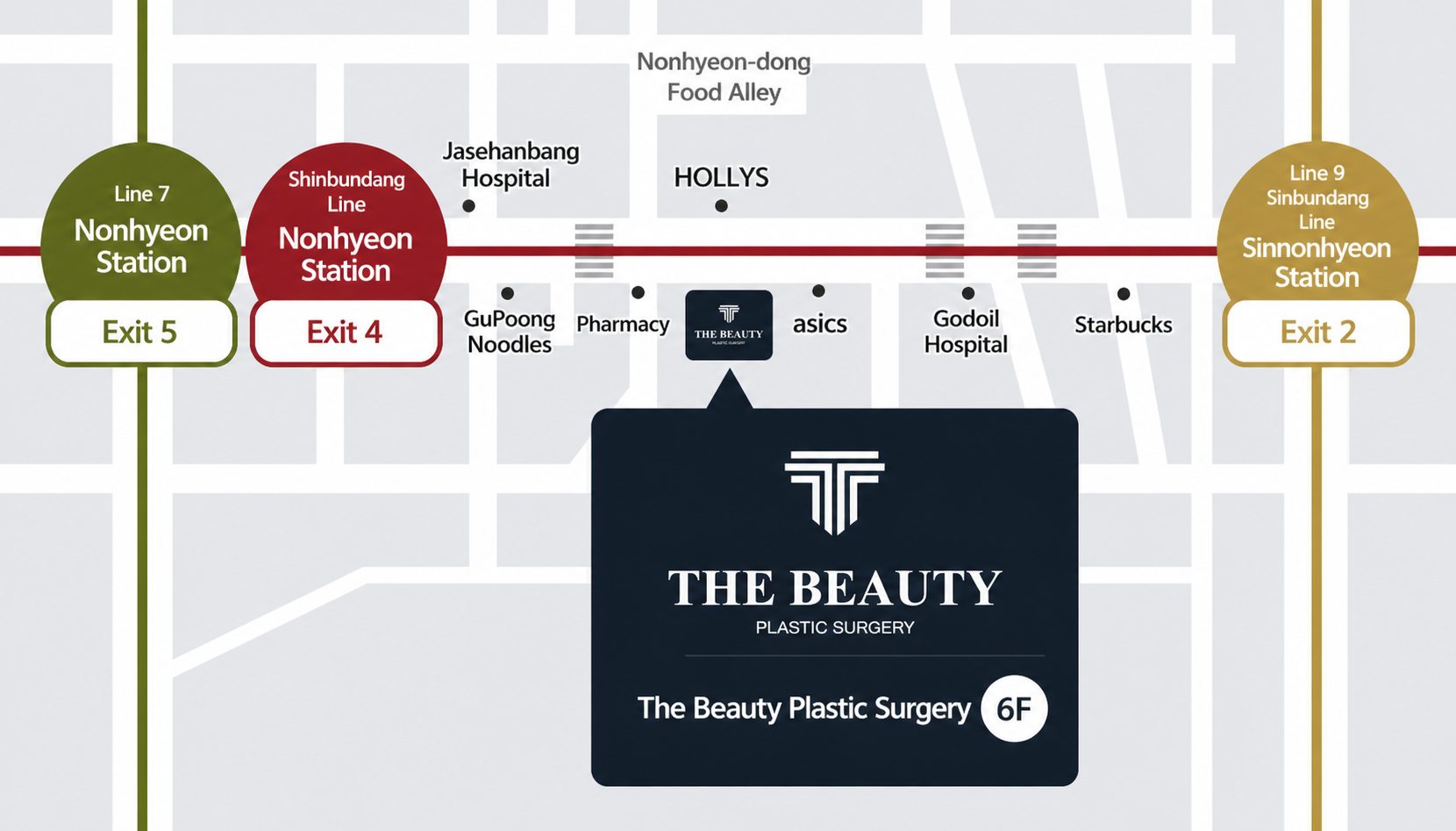
Stay near Nonhyeon Station (Line 7 Exit 5 / Shinbundang Exit 4), about 2 minutes away.
Language support
English-speaking coordinators help from consultation to follow-up. Chinese and Japanese support is available.
Composite facelift aftercare
Do
- Keep your head elevated for the first week
- Use cold compresses as advised
- Attend every follow-up
- Protect healing scars from the sun
Avoid for about 3 weeks
- Smoking and alcohol
- Strenuous exercise and heavy lifting
- Saunas and hot baths
- Rubbing the eyes or massaging the face
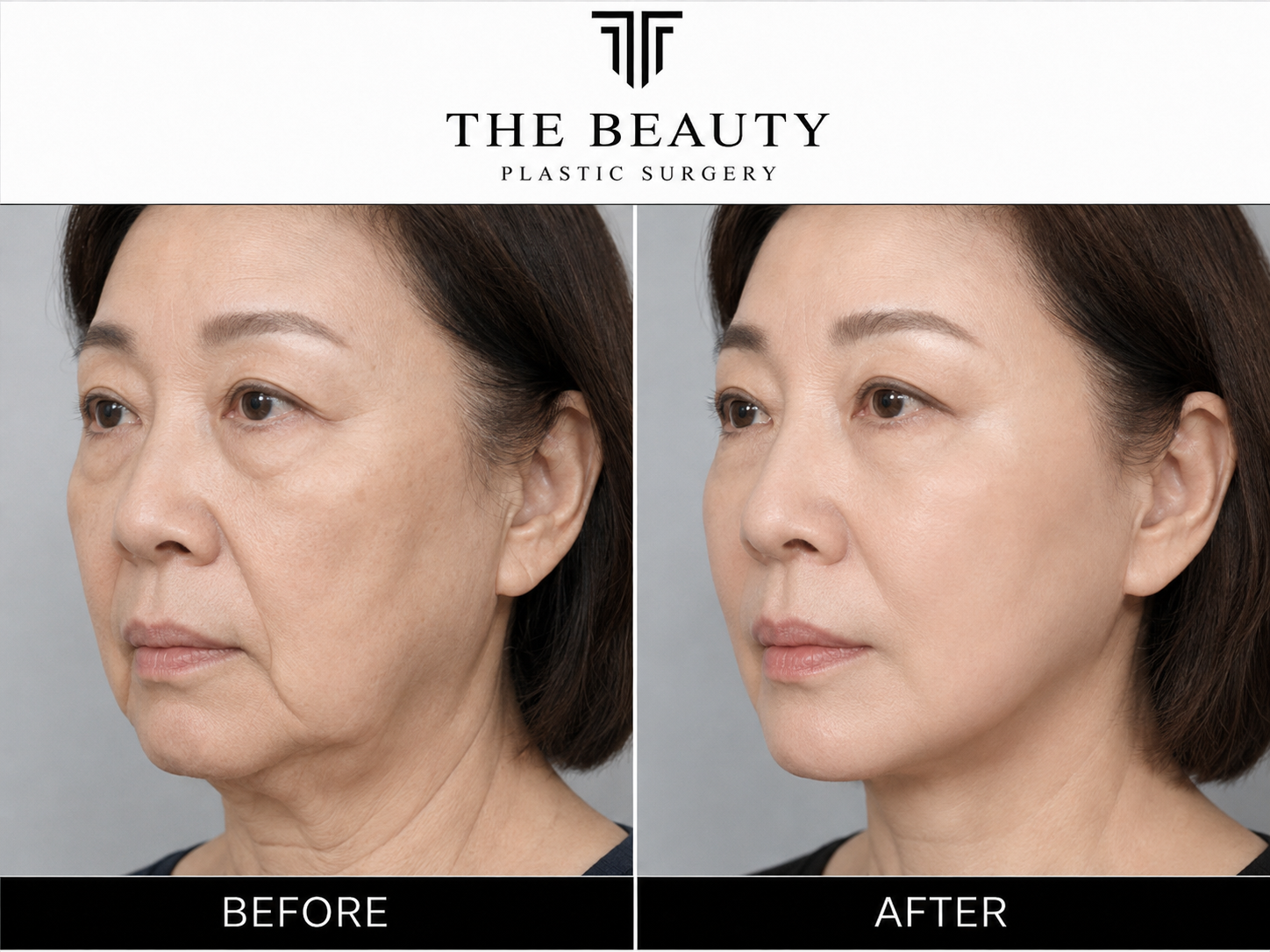
Facelift before and after photos
Examples of facelift results from our Gangnam clinic.
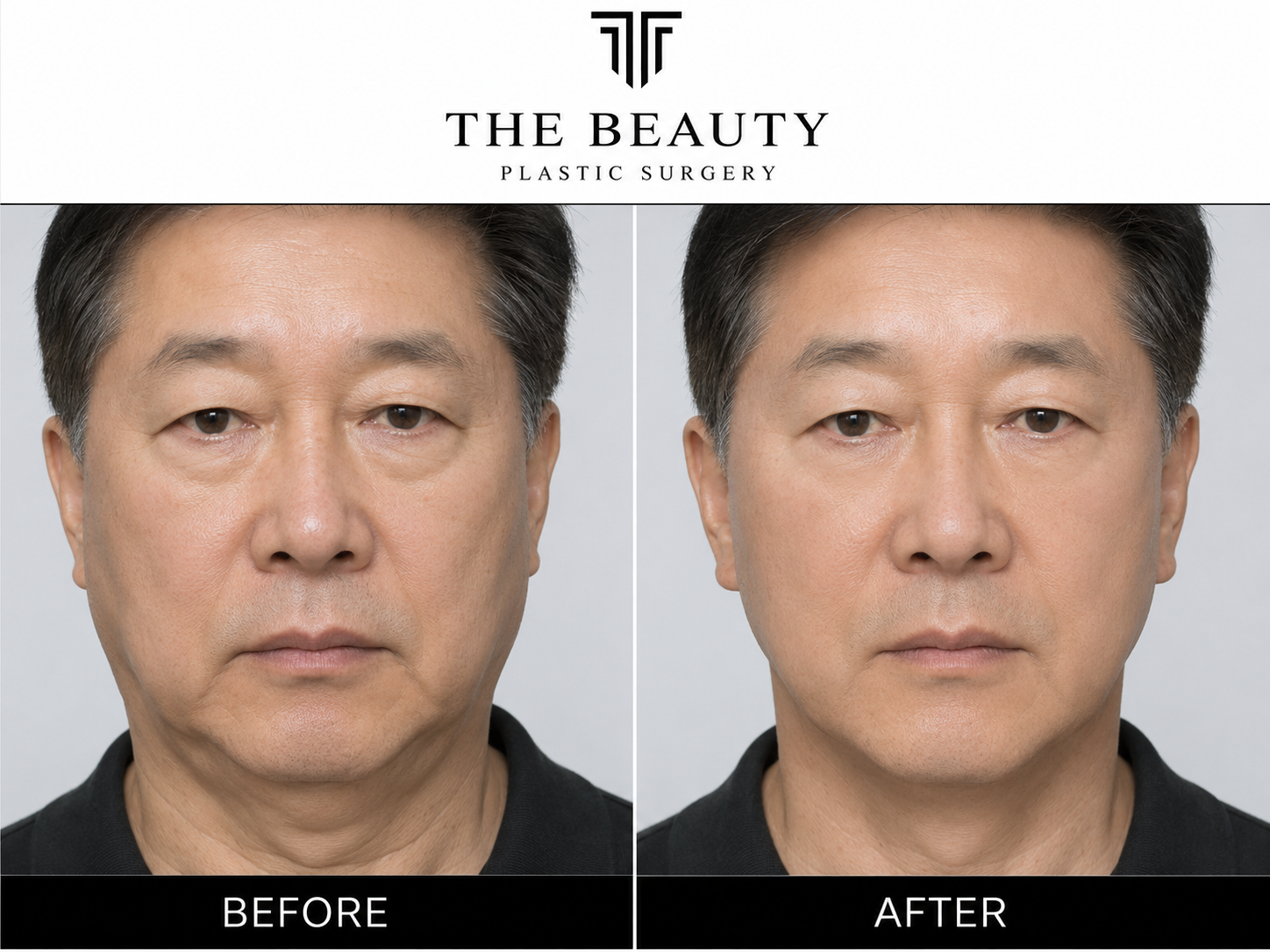
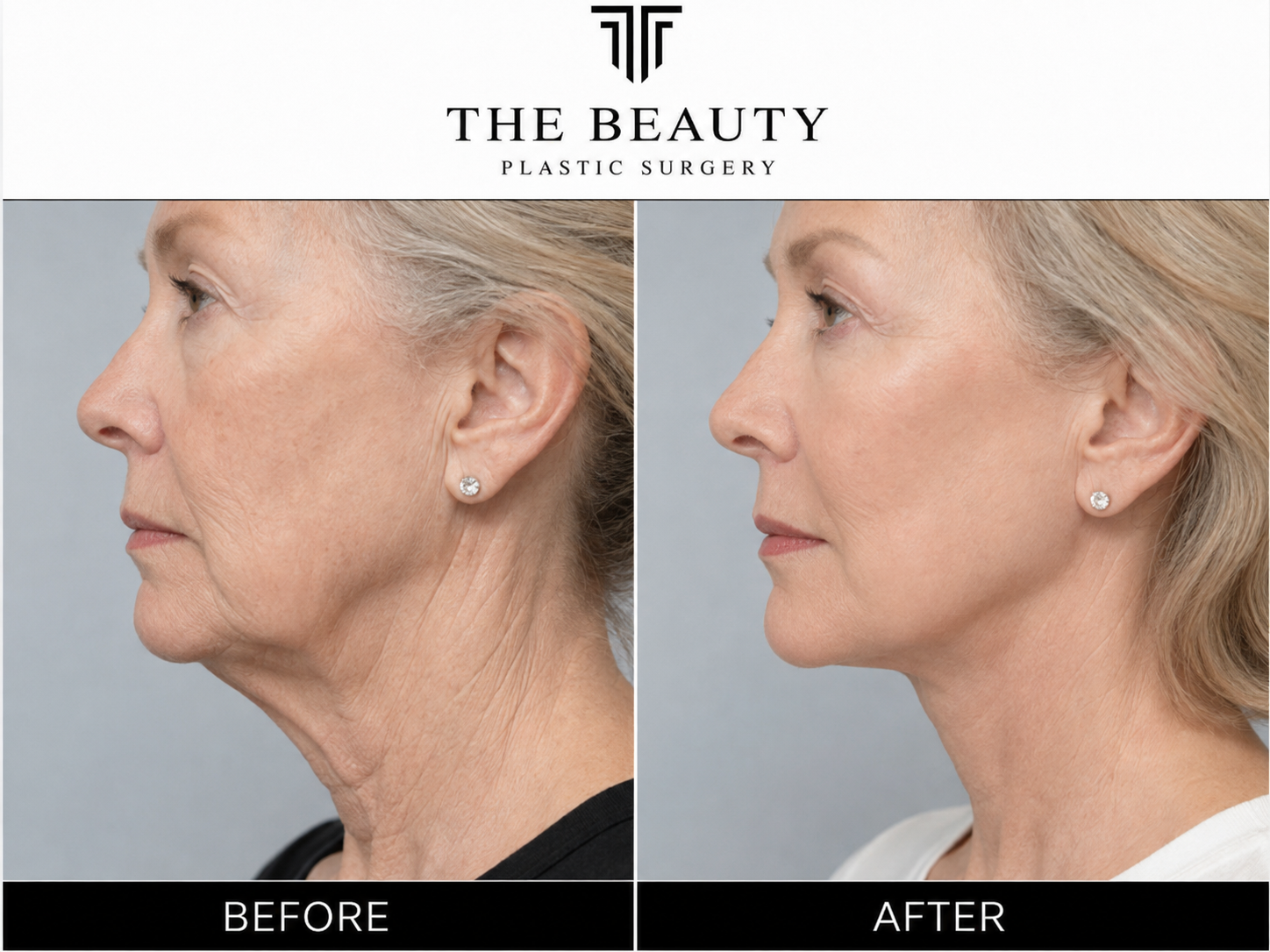
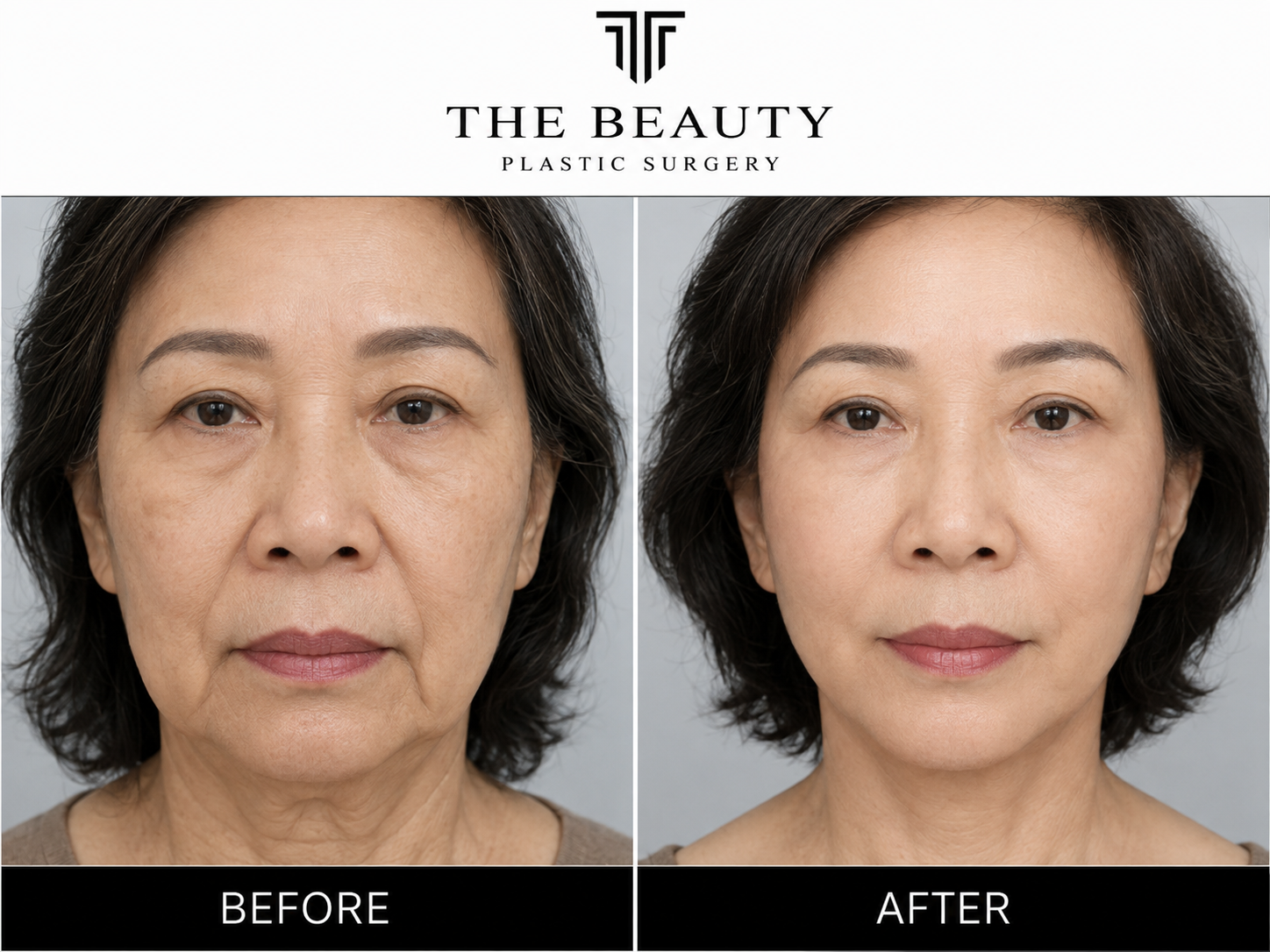
Photos shared with patient consent. Results vary between individuals.
Composite facelift: frequently asked questions
What makes a composite facelift different?
Who is a good candidate?
Does it replace fillers or fat grafting?
How long do results last?
How long should I stay in Seoul?
What are the risks?
Can it be combined with eyelid surgery?
How much does a composite facelift cost?
Visit our facelift clinic in Gangnam
Address
The Beauty Plastic Surgery
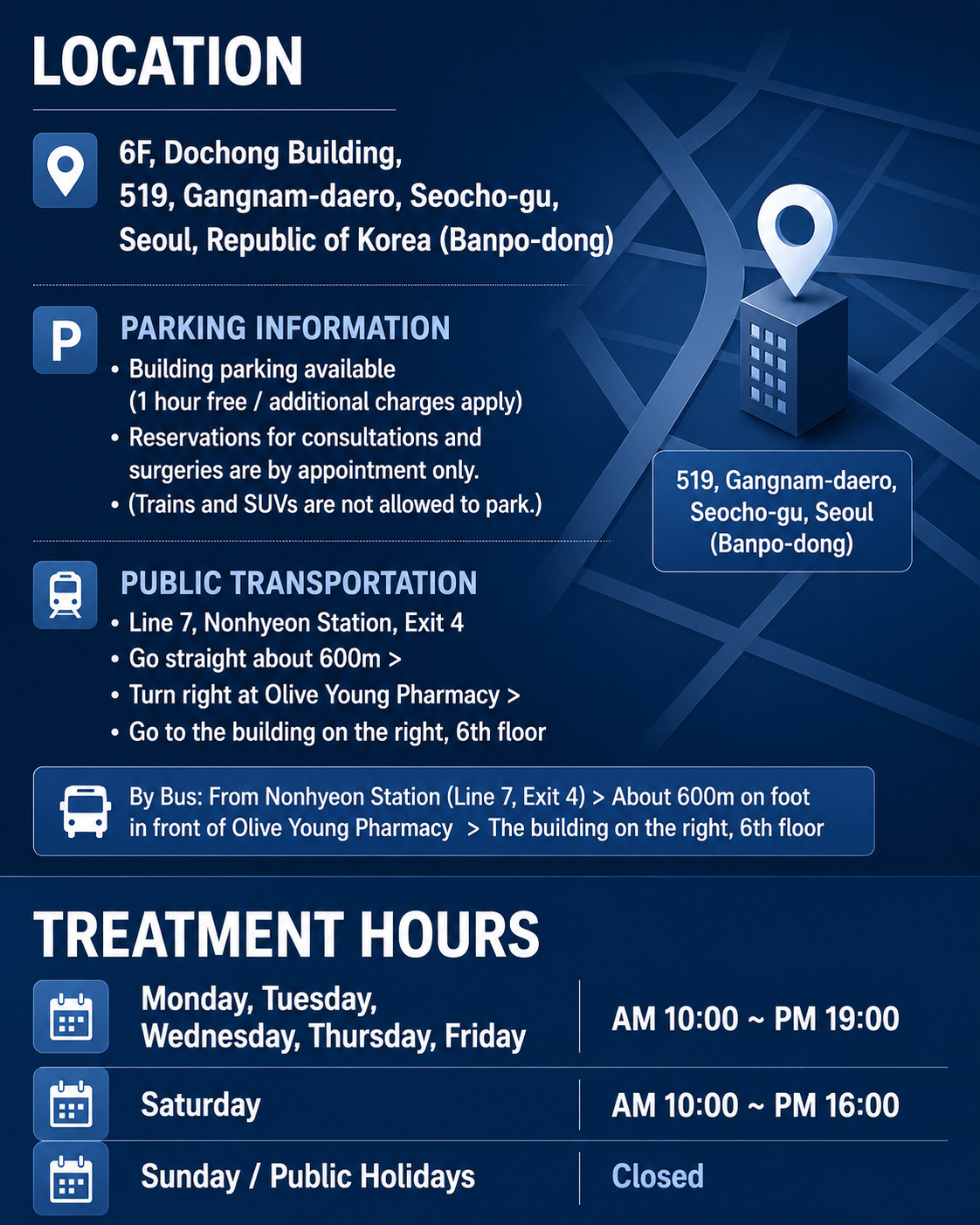
6F Dochung Building, 519 Gangnam-daero, Seocho-gu, Seoul, South Korea
서울 서초구 강남대로 519 도충빌딩 6층
Getting here
Nonhyeon Station (Line 7 Exit 5 / Shinbundang Exit 4) — approx. 2 min walk
Sinnonhyeon Station (Line 9 Exit 2) — approx. 8 min walk
Hours (KST)
Mon – Fri: 10:00 – 19:00
Sat: 10:00 – 16:00
Sun & public holidays: Closed
Plan your composite facelift in Seoul
Send us front and side photos and your travel dates. We’ll reply with an initial opinion and an estimated cost.
Results vary between individuals. This page is for general information and does not replace a medical consultation.