01
Midface lift
Repositions the cheek fat pad and supporting tissues to restore cheek height and soften smile lines.
Best for Descended, flattened cheeks
A midface lift repositions the cheek fat pad and supporting tissues that slide down with age, softening smile lines, tear troughs and under-eye hollowness without an overfilled look. It is performed by a board-certified plastic surgeon at our clinic in Gangnam, Seoul.

A midface lift is surgery that lifts the cheek fat pad and its supporting tissues back to a higher, more youthful position. As we age, the cheeks descend and flatten. This deepens the nasolabial (smile) lines, creates a visible tear trough and can make the under-eye area look hollow and tired.
Instead of adding volume, a midface lift repositions what is already there. Most patients find the result looks natural rather than “filled”, because the cheek returns to where it used to sit. It can also soften early jowls that start below the cheek.
A midface lift is different from a lower facelift, which focuses on the jowls and jawline, and from fat grafting, which adds volume but does not lift. These procedures are often combined for a balanced result.
A midface lift is often suitable for adults with reasonably good skin elasticity who notice changes mainly in the cheek and under-eye area. Most patients are in their 30s to 60s, although your anatomy matters more than your age.
Each option treats a different part of facial ageing.
| Midface lift | Facelift | Fat grafting | |
|---|---|---|---|
| Main target | Cheeks, smile lines, tear troughs | Lower face, jowls and jawline | Lost volume |
| How it works | Repositions descended tissue | Lifts deeper layers and redrapes skin | Adds your own fat |
| Looks overfilled? | No — uses your own tissue | No | Possible if overdone |
| Often combined with | Lower blepharoplasty, fat grafting | Neck lift, midface lift | Midface lift, facelift |
Many patients benefit from a combination. See our facelift guide for all options.
Your surgeon recommends the approach and any combined procedures after examining you.
Repositions the cheek fat pad and supporting tissues to restore cheek height and soften smile lines.
Best for Descended, flattened cheeks
Uses small, hidden incisions and a camera to lift the mid-face with minimal visible scarring.
Best for Mild to moderate descent, scar concerns
Learn more →Combines cheek lifting with treatment of under-eye bags for a smooth lid–cheek transition.
Best for Eye bags plus cheek descent
Learn more →Adds small amounts of your own fat where volume is still lacking after the lift.
Best for Hollow cheeks or temples
Learn more →A step-by-step process planned around your stay in Seoul.
Send front, side and smiling photos via WhatsApp for an initial assessment.
Your surgeon examines your cheeks, eyes and skin and agrees the plan and realistic goals with you.
Medical checks confirm you are fit for sedation or general anaesthesia.
The procedure typically takes about 2–4 hours.
Swelling checks and stitch removal at the clinic.
Send photos as the result settles over 3–6 months.
Typical milestones — your own recovery may be faster or slower.
| Stage | What to expect | What you can do |
|---|---|---|
| Day 1–3 | Swelling and tightness in the cheeks and under the eyes; bruising | Rest with your head elevated; cold compresses as advised |
| Week 1 | Swelling peaks, then starts to ease | Gentle walks; soft foods if smiling feels tight |
| Week 2 | Visible improvement; stitches removed | Light daily activities; most patients can fly |
| Month 1 | Mild residual swelling; face feels more natural | Return to most normal activities |
| Month 3–6 | Final cheek contour | Review of your result |
Risks such as bleeding, infection, temporary numbness, asymmetry or changes to the lower eyelid position are discussed at consultation and managed by your surgeon.
Practical support from enquiry to follow-up.
Enough time for consultation, surgery, check-ups and stitch removal before flying home.
Send photos via WhatsApp for a suggested plan before you book.
English, Chinese and Japanese support, with airport transfer and hotel suggestions.
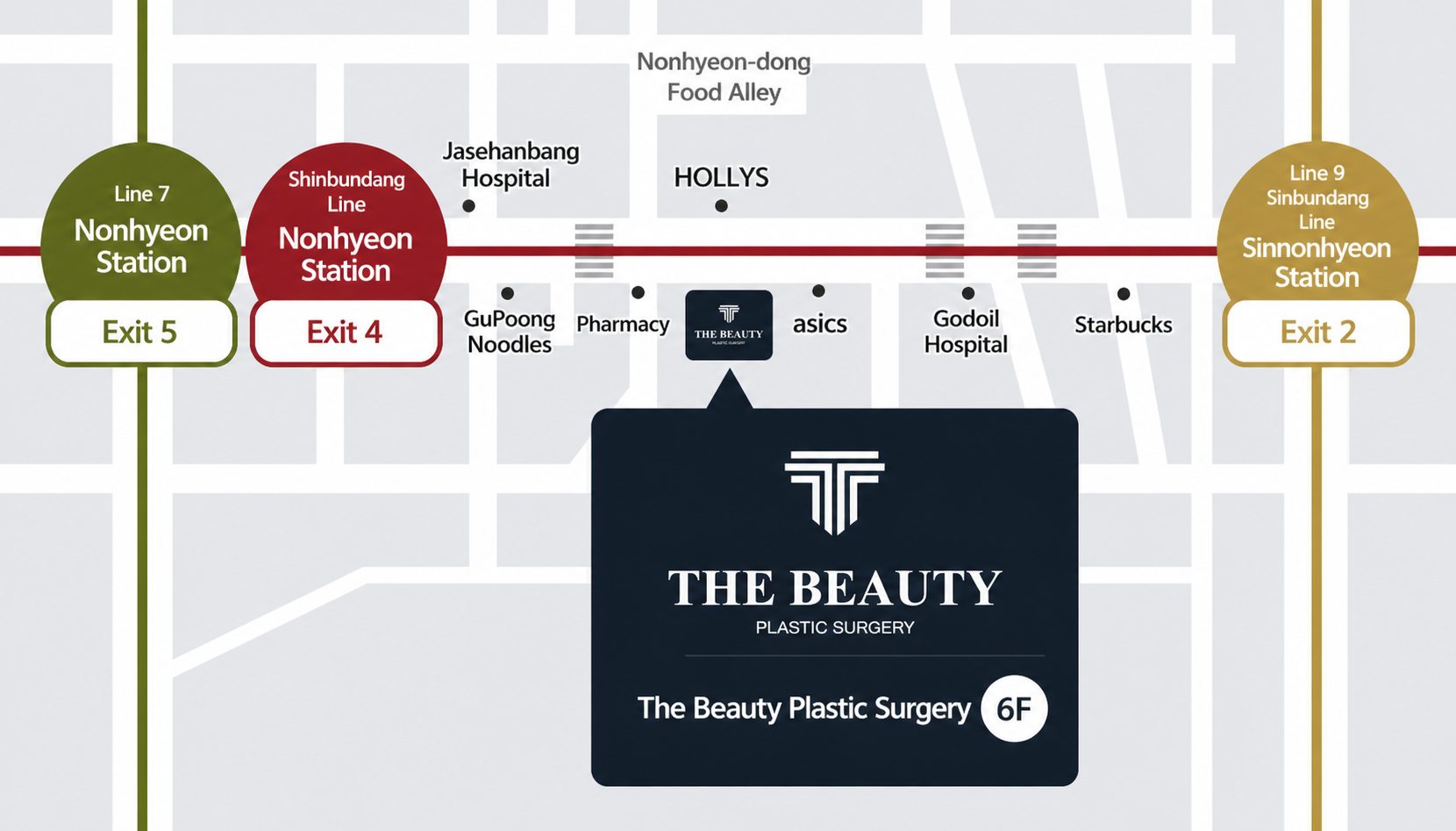
About 2 minutes from Nonhyeon Station (Line 7 Exit 5 / Shinbundang Exit 4); 8 minutes from Sinnonhyeon (Line 9 Exit 2).
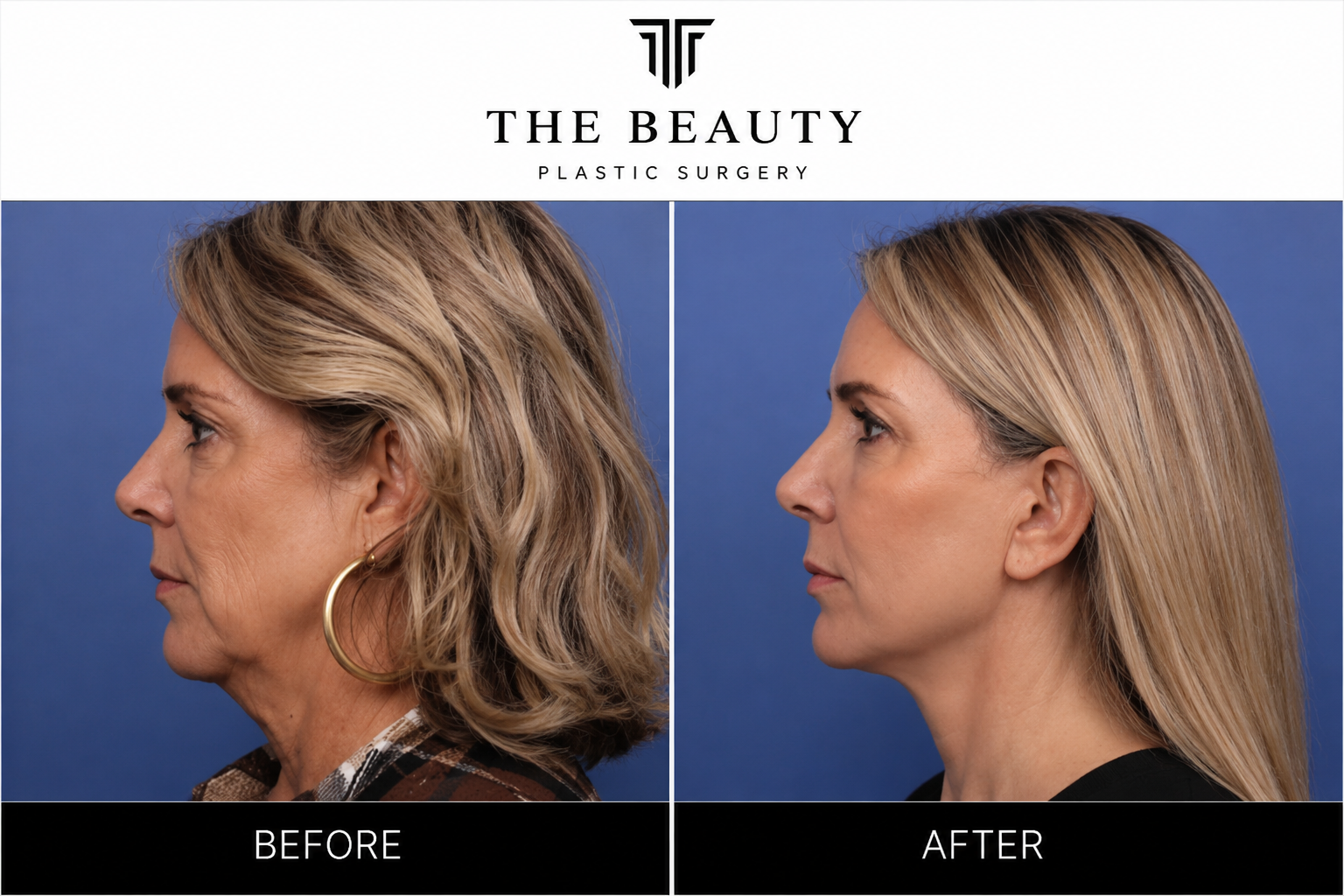
Examples of facial lifting results at our Gangnam clinic.
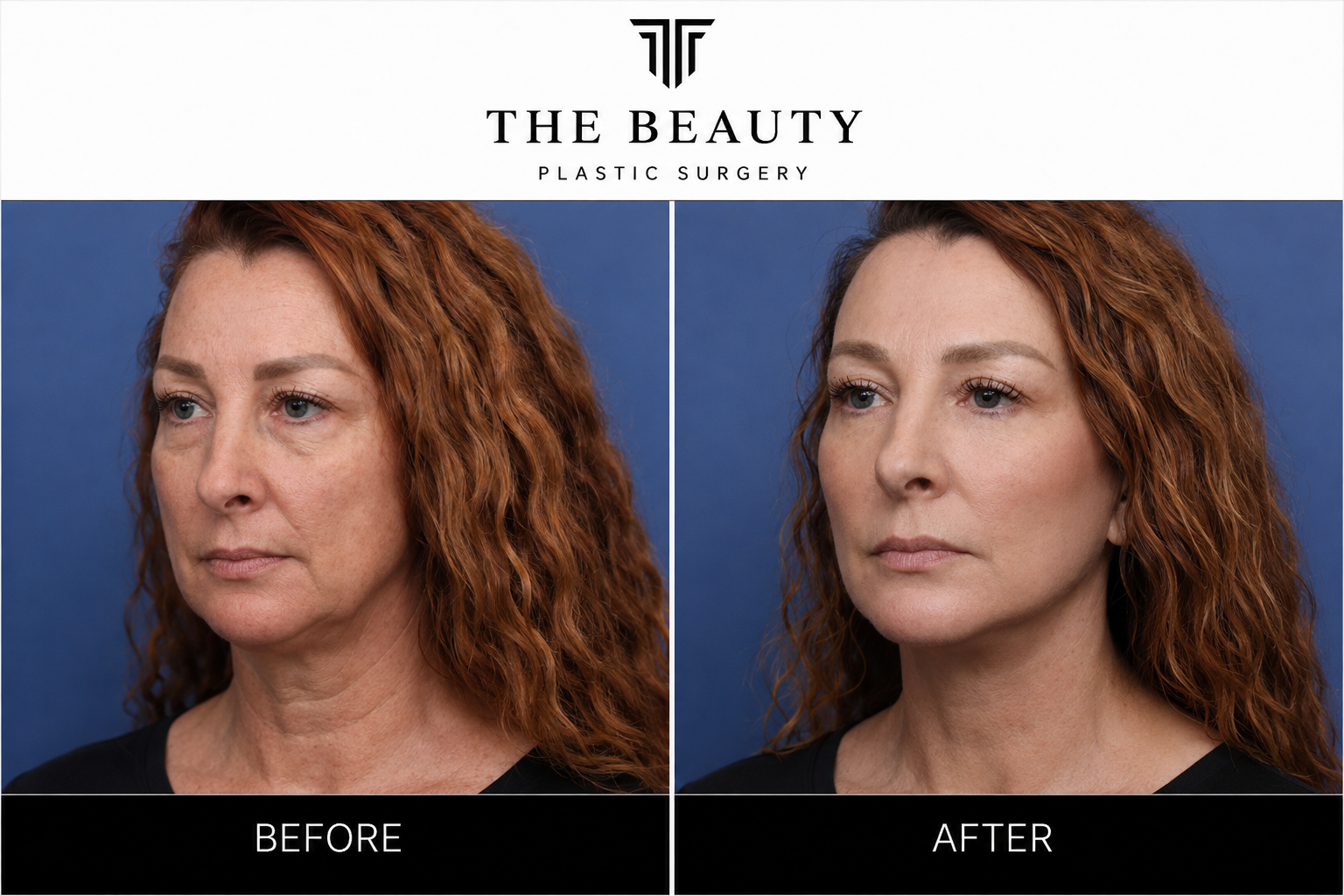
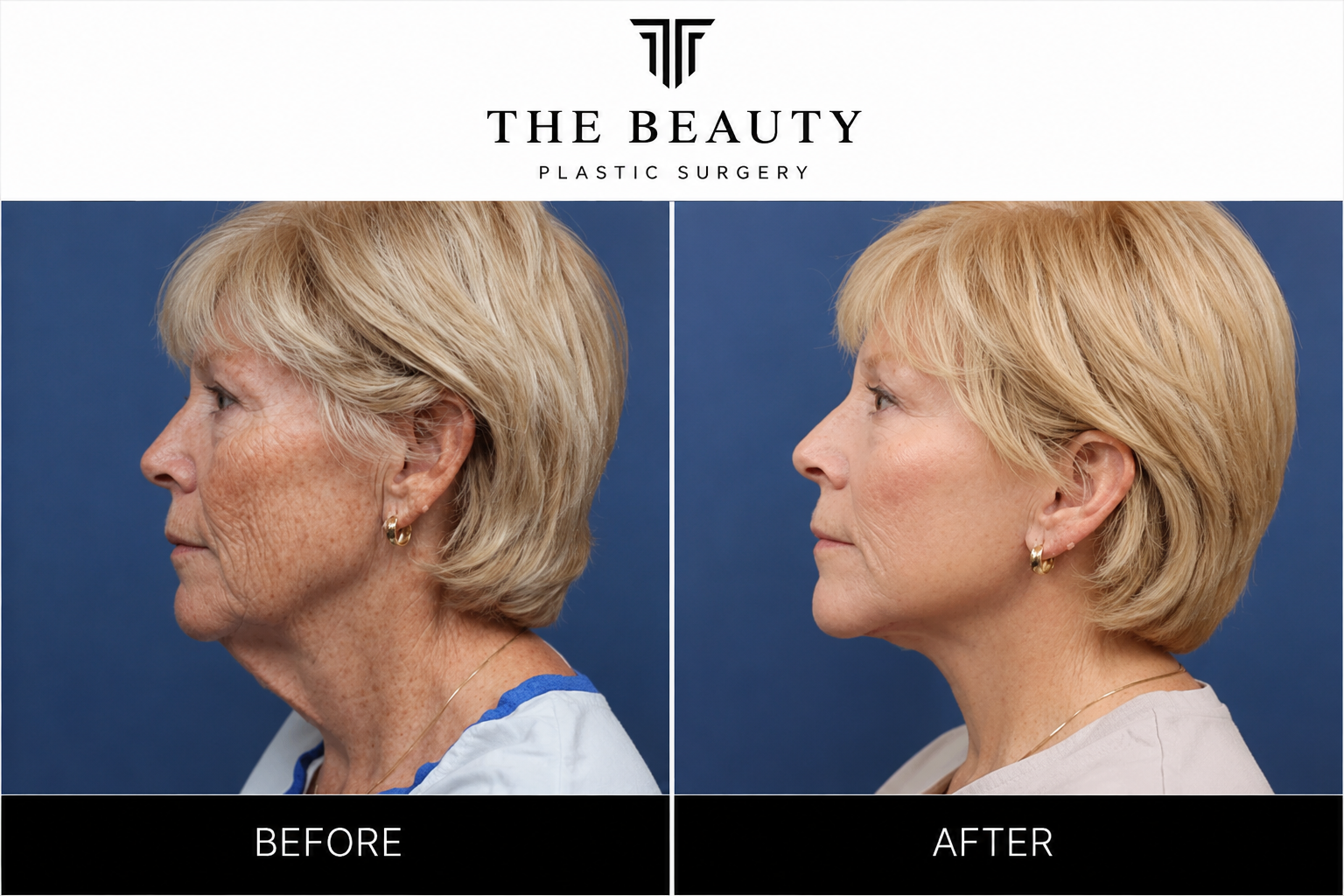
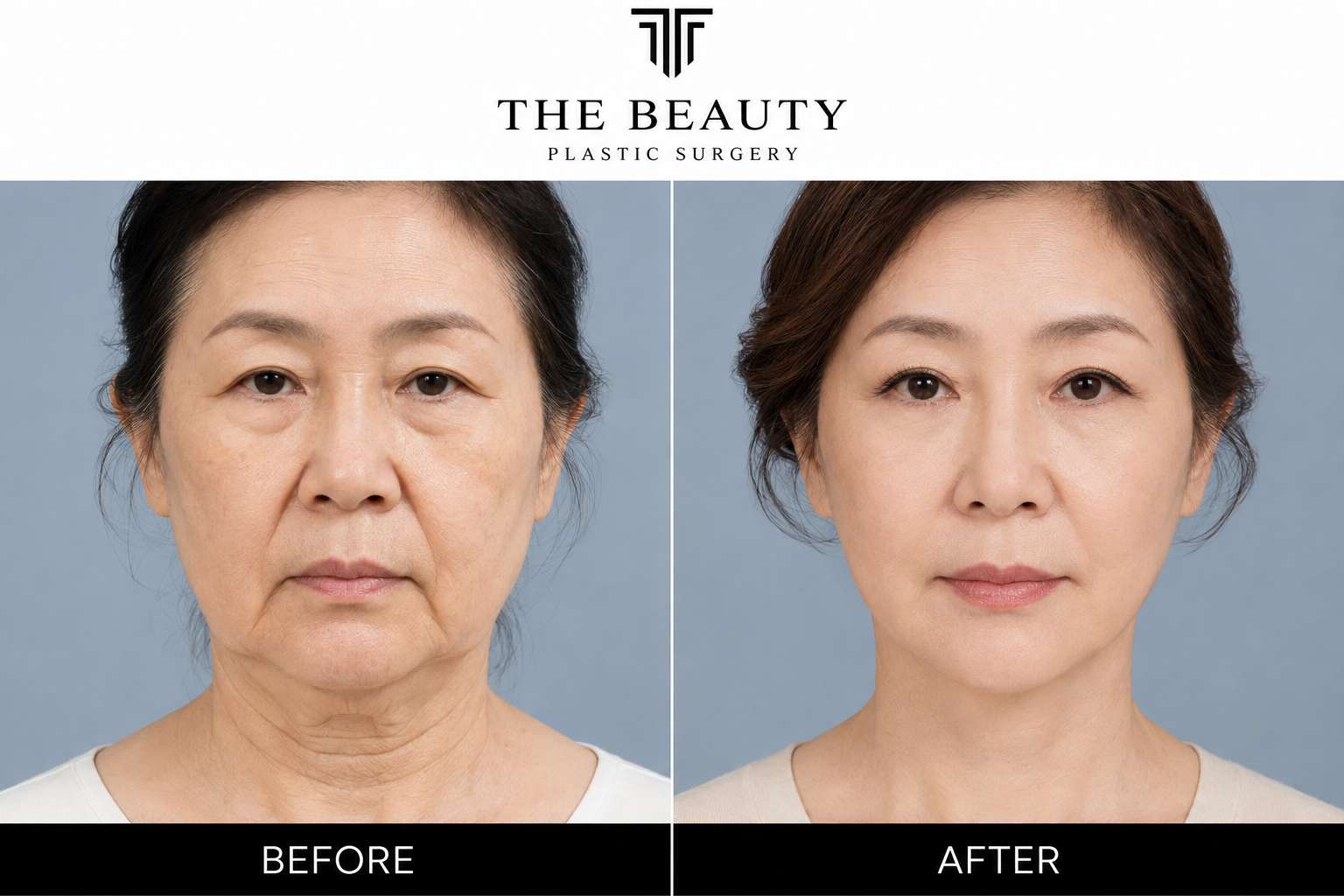
Individual results vary.
The Beauty Plastic Surgery
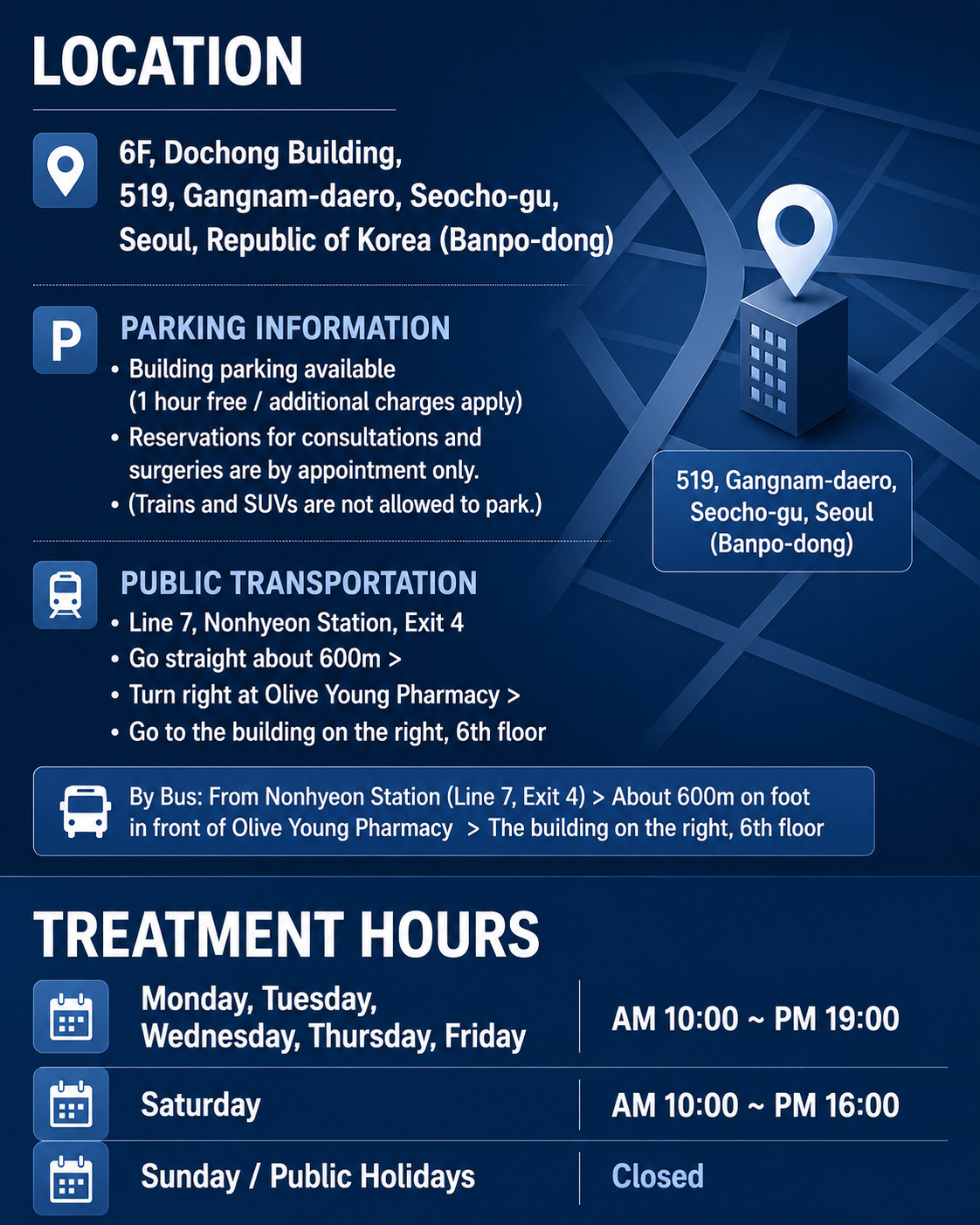
6F Dochung Building, 519 Gangnam-daero, Seocho-gu, Seoul, South Korea
서울 서초구 강남대로 519 도충빌딩 6층
Nonhyeon Station (Line 7 Exit 5 / Shinbundang Exit 4) — approx. 2 min walk
Sinnonhyeon Station (Line 9 Exit 2) — approx. 8 min walk
Mon – Fri: 10:00 – 19:00
Sat: 10:00 – 16:00
Sun & public holidays: Closed
Send us front, side and smiling photos and your travel dates. Our team will reply with suitable options and next steps.
Results vary between individuals. This page is for general information and does not replace a medical consultation.
Our Location
Fill out this quick form to get expert recommendations tailored to your skin goals. No pressure, no obligation.
THE BEAUTY Plastic Surgery is a boutique clinic in Gangnam, Seoul, specializing in natural, refined results through personalized surgical design. From facelift and facial contouring to eye and nose surgery, our expert team delivers precise, advanced care. With English-speaking staff and a premium setting, we provide safe, seamless treatment for international patients.
6th Floor, Dochung Building, 519
Gangnam-daero, Seocho-gu, Seoul, Korea
Clinic Name: THE BEAUTY Plastic Surgery
Phone Number:
© 2026 All Rights Reserved THE BEAUTY Plastic Surgery Clinic